Did you know? Replacing windows on heritage properties often requires a permit
By Curtis Wolfe
Did you know that properties located within a heritage conservation district, or having an individual heritage designation, usually require a heritage permit before their windows can be replaced?Windows are considered an important part of a building’s heritage character. Their size, shape, materials, and even the way they open, contribute to the overall look of a historic streetscape.
Under the ByWard Market and Lowertown West Heritage Conservation District Plans, property owners are required to conserve and retain historic windows and doors wherever possible, including their opening style, design details, proportions, and any decorative elements.
A heritage designation doesn’t prevent property owners from replacing their windows, but before they do so, they should consider restoring or rehabilitating them. As well, if they are replacing later or non-original windows, heritage guidelines recommend the installation of windows that conform to the original heritage design of the building.
Under the Ontario Heritage Act, changes to designated local heritage properties require the approval of the City of Ottawa. The permit process is intended to help ensure that the historic appearance of heritage buildings and the broader streetscape is preserved as much as possible for the future.
According to Lesley Collins, Program Manager of Heritage Planning at the City of Ottawa, the process for obtaining a heritage permit for window repair or replacement is generally straightforward and relatively quick. “A heritage permit application for window repair or replacement is generally reviewed by city staff under delegated authority. Once a complete application is received, the permit is typically issued within five to ten business days,” she explained.
City heritage staff, she added, place a strong emphasis on preserving original materials wherever feasible. “City heritage staff encourage property owners to repair historic or original windows wherever possible. If window replacement is proposed instead of repair, additional information, such as a condition assessment, may be required to explain why the original windows cannot reasonably be repaired.”
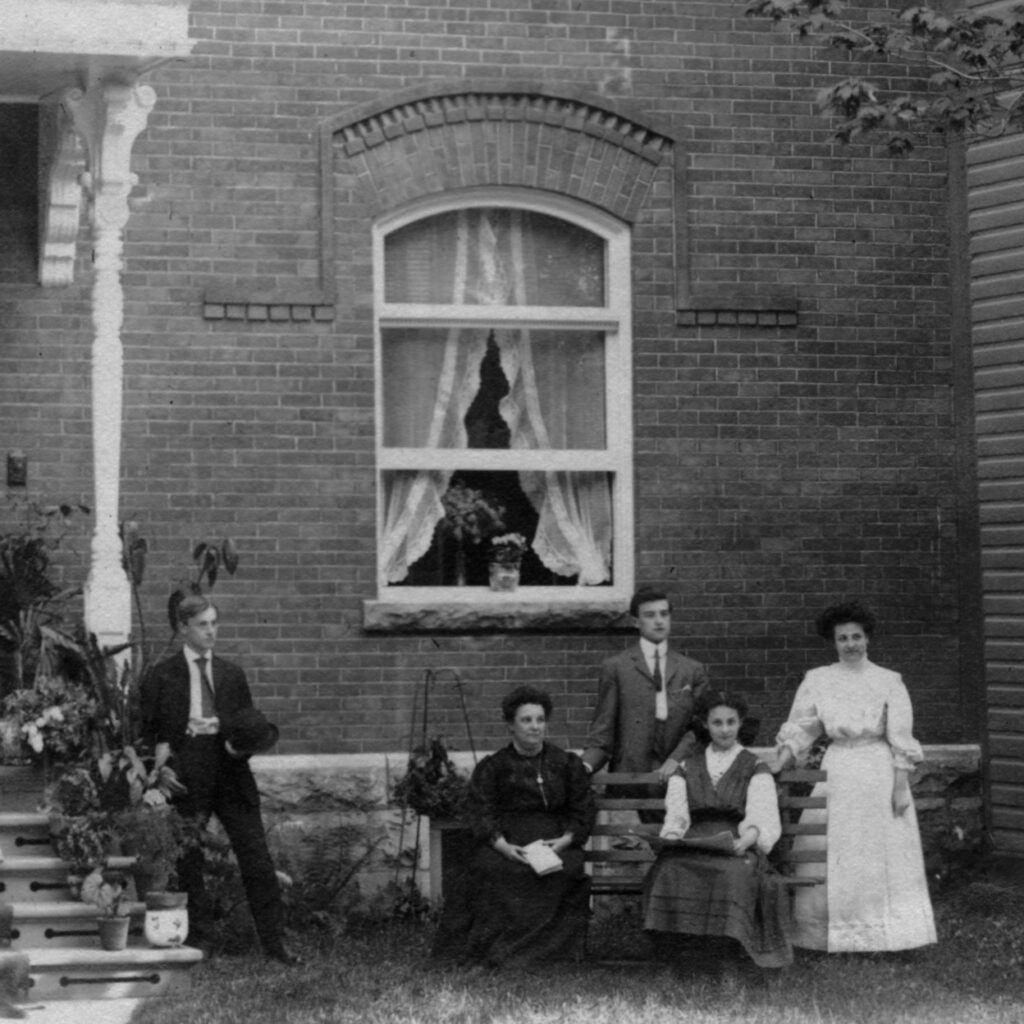
The Alphonse Rochon family outside their sash-style window at 150 St Patrick Street. (Photo: Gaudreault family / Marc Aubin)
“Staff work with owners to find compatible replacement windows that replicate or reference a building’s original windows in their design, materials, and appearance. When the original design is unknown, inspiration from traditional window patterns in the Heritage Conservation District can help inform the design of the new units.”
When it comes to demonstrating that new windows are appropriate for a heritage property, requirements can differ by area. “Requirements vary by Heritage Conservation District. In general, applicants are asked to show the condition of the existing windows and how the new windows will respect the building’s heritage character.
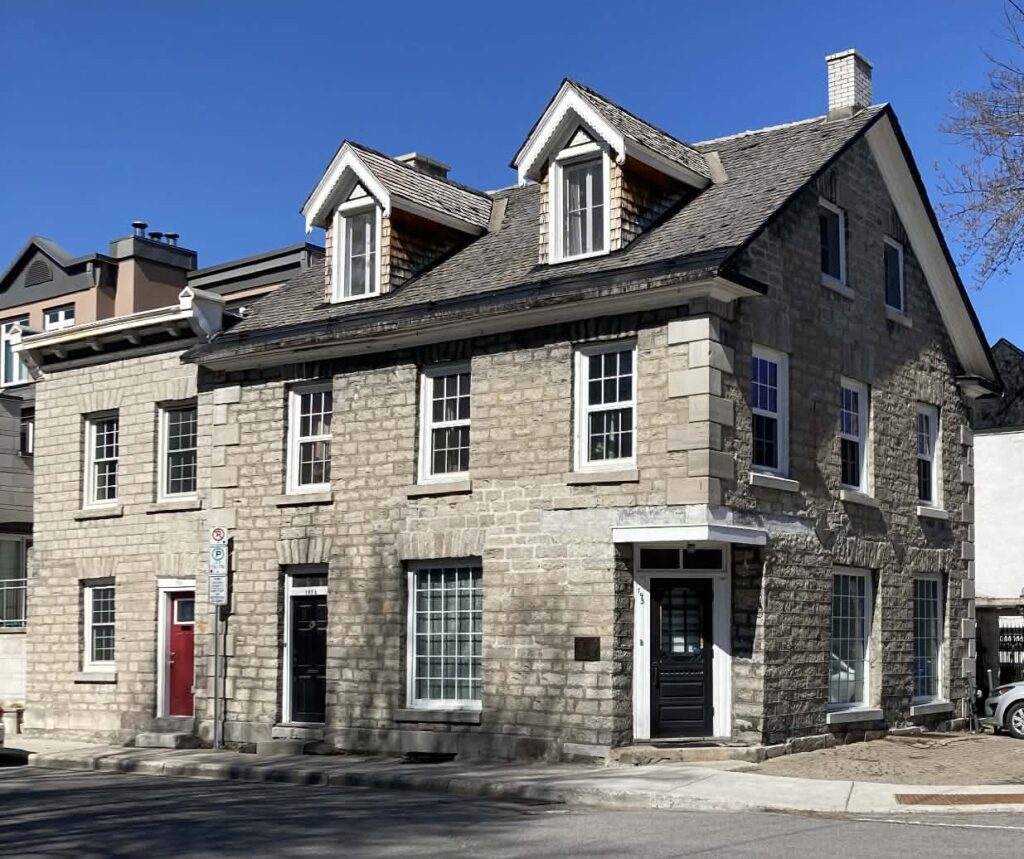
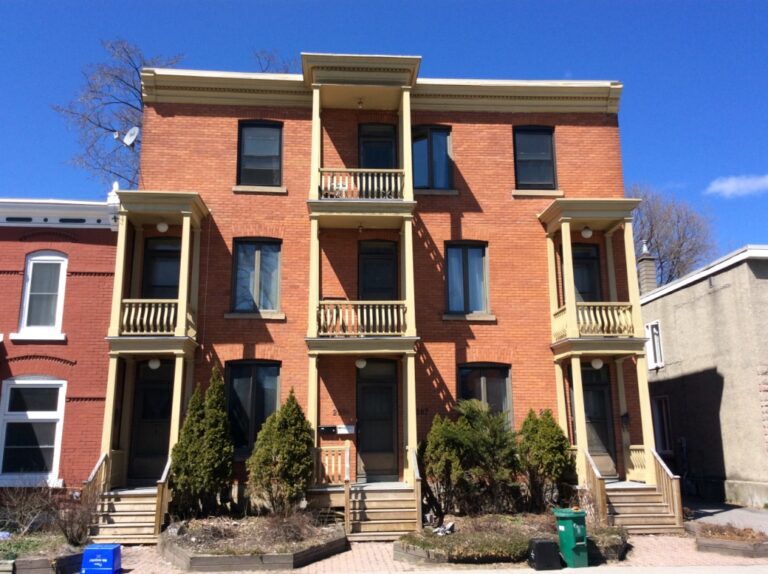
The multi-paned and six-over-six pattern windows of the Rathier House, 193-195 Cumberland Street.(Photo: Curtis Wolfe)
This typically includes a description of the existing windows with photos and the proposed specifications for the new windows,” Collins said.
In the ByWard Market and Lowertown, many of the earliest buildings featured multi-paned windows, often in a traditional six-over-six pattern. Later in the 19th century, two-over-two windows became more common as manufacturing processes made it possible to form larger sheets of glass.
Both sash and casement style windows were used. Sash windows consist of movable panels that slide vertically within the frame, while casement windows are hinged at the side and open outward like a door. The latter were commonly found in religious buildings and some of the earliest houses.
The city offers financial support to owners of buildings designated under the Ontario Heritage Act. The Heritage Property Grant Program provides grants on a matching basis for up to $10,000 for small-scale buildings and up to $35,000 for large-scale buildings. However, the city cautions that
the demand is currently greater than the available funding.
If you live in the ByWard Market or the Lowertown West Heritage Conservation Districts and are thinking about replacing windows, please contact the city’s heritage planning staff through heritage@ottawa.ca before starting work as your first step.