A message from the new President of the Lowertown Community Association
By Josiah Frith
As I begin my term as President of the Lowertown Community Association (LCA), I’d like to extend my sincere thanks to Sylvie Bigras for her past five years as President. Her dedication, countless volunteer hours, and steady leadership have guided us through a period of significant change. She’ll continue to share her experience as our Communications Chair, and I look forward to working alongside her and the rest of our very talented team in this new chapter.
And, I’d like to share a little about myself and how I see my role within an association made up of people who care deeply about this community.
I’m a hairstylist with more than 30 years behind the chair, and I’ve called Lowertown home for nearly all that time. I’m raising my children here, I run my business here, and I volunteer in the community. If there is one thing my work, family, and community involvement has taught me, it is the importance of listening.
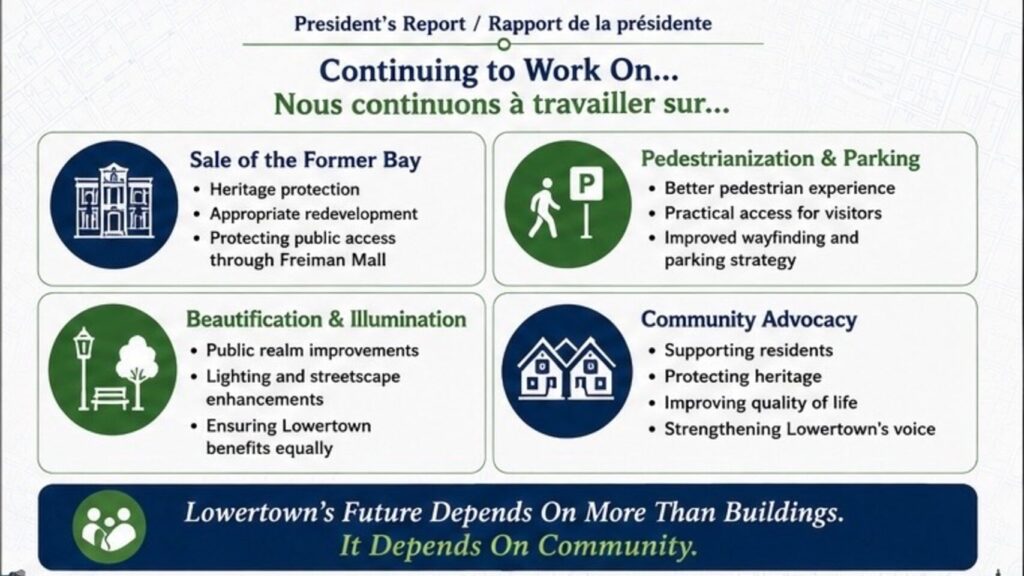
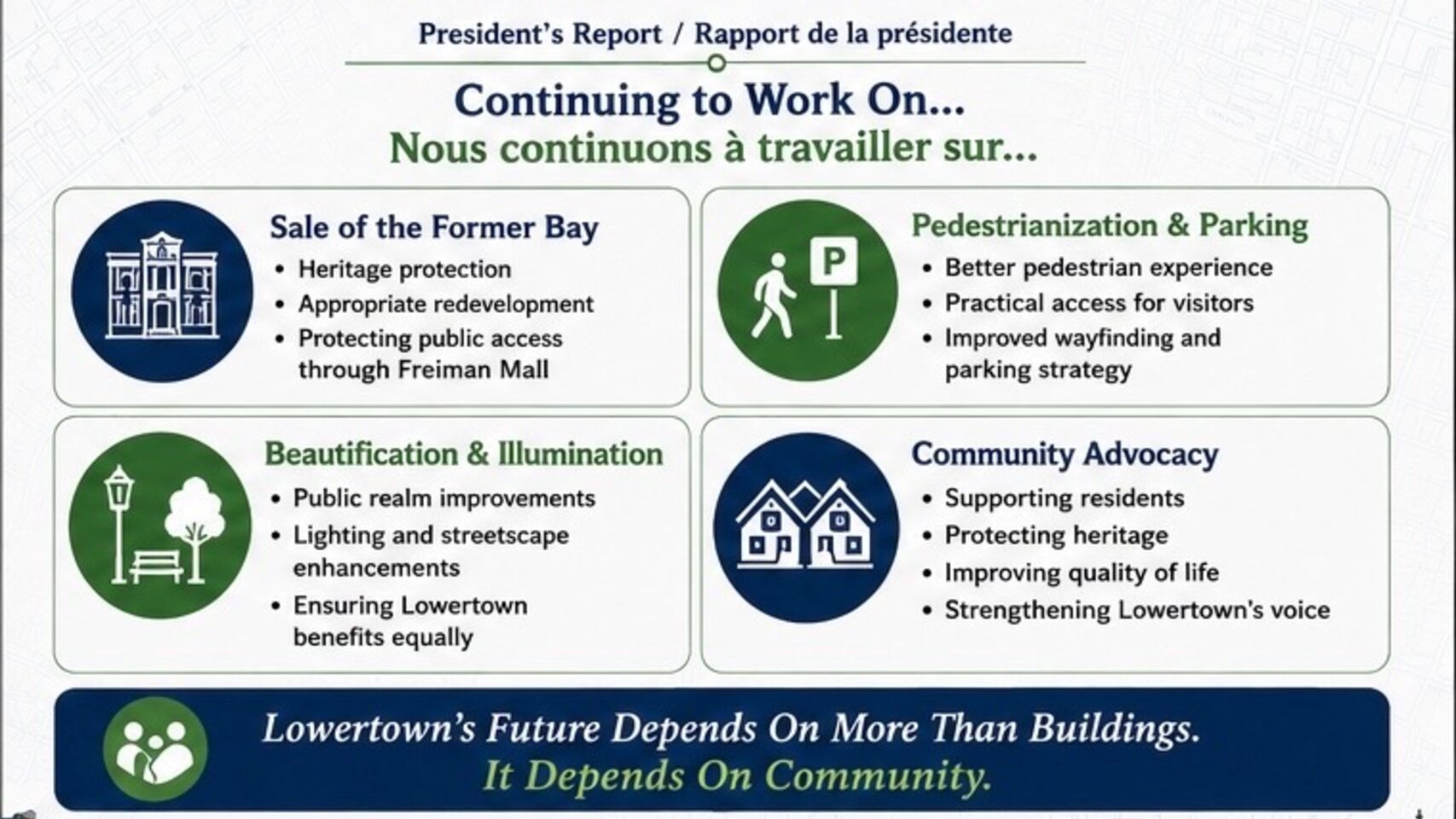
That is also one of the strengths of the LCA. We are not one voice. Our executive, committees, and volunteers bring different experiences, expertise, and perspectives to the table. Passionate residents are working on transportation, planning, heritage, housing and homelessness, community safety, parks, and the many everyday issues that affect health and wellbeing in Lowertown.
We don’t always agree, nor should we. No one has a monopoly on good ideas – not City Hall, not the LCA, and certainly not any one individual. Our job is to listen, bring people together, and make sure residents have a meaningful voice before decisions are made.
Some common principles connect much of our work. A successful downtown is built first for the people who live here. The best cities aren’t built by trying to attract visitors. They attract visitors because they are wonderful places to live. A healthy neighbourhood is one where the bakery is busy on a Tuesday morning, children can walk safely to school, neighbours meet in the park, and local businesses know the people who come through their doors. Tourism, nightlife, and major events add to downtown life, but they need that foundation beneath them.
We also don’t have to choose between heritage and growth. Lowertown is always changing. Our historic buildings show us that a community of small shops and homes built closely together can evolve over generations. We can add housing and welcome new neighbours without losing the things that make this place distinctive.
Transportation is about much more than moving vehicles. King Edward Avenue is perhaps our clearest example of what happens when a regional transportation problem is routed through the middle of a residential neighbourhood. Streets should connect communities, not divide them.
Lowertown also has a long history of caring for people in need, and that remains part of who we are. Compassion and healthy communities are not competing ideas. Housing, healthcare, and social supports work better when responsibility is shared across Ottawa rather than increasingly concentrated in a few downtown neighbourhoods.
These are complicated issues, and there are people across Lowertown putting a great deal of time and thought into them. As President, my job is to support that work, help bring different voices together, build relationships with our partners, and make sure Lowertown is heard.
Lowertown never stands still. The challenge isn’t to prevent change. It is to shape it together so this remains a neighbourhood where people can build a life, raise a family, run a business, and feel that they belong.
(AI was used to help with the creation of this article.)