King Edward Avenue and the speed camera: what it revealed and what we’ve taken away
By Josiah Frith
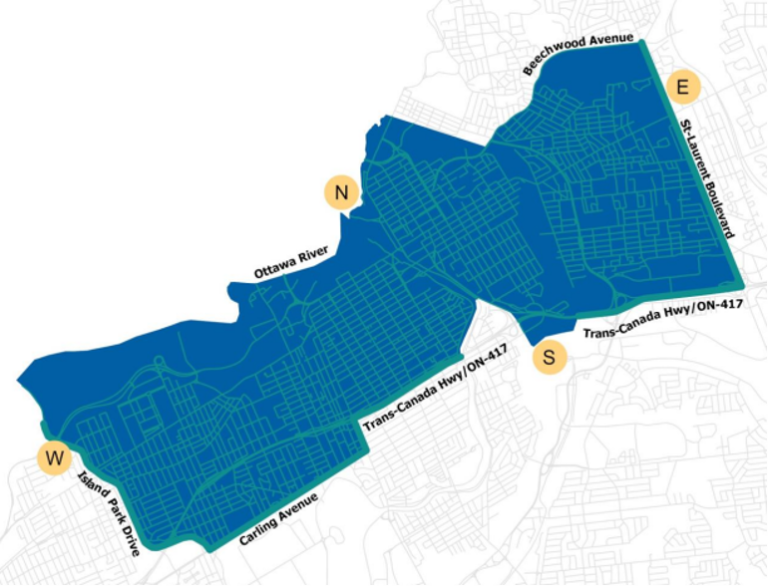
As I write this, a few blocks from King Edward Avenue, the sound of a truck engine brake cuts through the morning. It’s a familiar interruption here – not occasional, but routine – and it says more about the street than any traffic report. King Edward is not behaving like an ordinary city street. It is being treated like a through-route for speed and volume, even though it runs past front doors, school routes, laneways, and side streets where daily life unfolds.
The debate over the speed camera on King Edward has been framed as a dispute about enforcement or revenue. That framing misses what the camera actually was. It was not the cause of the problem. It was a response – and a revealing one – to a street that has been asked to do too much, too fast, and in the wrong place.
What the camera showed
There is little dispute that the speed camera on King Edward changed behaviour. Traffic slowed. Movements became more predictable. People backing out of laneways or crossing the street felt the difference. The camera provided consistent monitoring on a street where occasional police enforcement had never been enough.
The scale of the issue was unmistakable. Before being shut down by the province, the King Edward speed camera was the busiest automated enforcement location in Ottawa. In just over six months of operation, it issued more than 22,000 tickets – roughly twice as many as the next busiest camera in the city, according to CTV News reporting. This number does not point to over-enforcement. It points to a street where speeding had become routine rather than the exception, where the cues drivers received told them to move quickly, not carefully.
Some critics have argued that the camera ticketed drivers for speeds a police officer might normally overlook, relying on a commonly assumed “10 km/h buffer.” But that buffer has never been a rule – only an informal tolerance that crept into everyday driving habits. The camera didn’t remove discretion so much as it removed inconsistency. It replaced informal tolerance with predictable enforcement on a street where normalized speeding had become a quiet form of risk transfer onto the people who live there.
Speed limits are not suggestions. They are set in relation to context, to sightlines, crossing points, turning movements, and the likelihood of people being present. Vision Zero principles make an uncomfortable but simple point: every kilometre per hour matters. Even small increases in speed significantly raise the risk and severity of injury, particularly on streets where people walk, cycle, cross, and interact. On King Edward, the issue was not a handful of drivers drifting slightly over the limit. It was thousands of vehicles routinely travelling well above 40 km/h on a street lined with homes, side streets, and daily life – a place that should slow people down, not rush them through.
The revenue generated by the cameras made some people uneasy. But the underlying principle is neither radical nor punitive – when a behaviour creates noise, danger, pollution, and wear on infrastructure, it is reasonable that the cost of mitigating that harm falls on those causing it.
City-wide, automated speed enforcement generated tens of millions of dollars in Ottawa, with that revenue legally directed to road safety programs rather than general spending. The King Edward camera contributed a disproportionate share of that funding, reflecting the scale of the problem on that corridor.
For residents, this matters. King Edward carries large volumes of traffic that do not begin or end in Lowertown. Much of it is regional or interprovincial, passing through on the way to somewhere else. Speed camera revenue helped ensure that those using the street in unsafe ways contributed to making it safer rather than leaving local residents to quietly subsidize the impacts through their taxes and their quality of life.
Removing the cameras did not remove the traffic. It removed one of the few mechanisms that acknowledged this imbalance.
A speed camera was never a complete solution
It was a coping tool for a street whose design and role are misaligned with its surroundings. King Edward’s width, long sightlines, and uninterrupted stretches visually invite speed. Streets behave the way they look. When a street feels like a highway, people drive as if it were one, regardless of signs.
The durable solution is design: narrowing lanes, reallocating space, introducing elements that signal to drivers that they are moving through a place, not passing over it. These changes work not because they punish, but because they make speeding feel out of place. Yet many of these tools are now restricted. Recent provincial legislation has limited municipalities’ ability to narrow lanes or add new bike lanes on arterial roads – some of the most effective, self-enforcing ways to slow traffic. At the same time, the province eliminated automated speed enforcement altogether.
The result is a stark contradiction: enforcement tools have been removed, design tools have been constrained, and commuting pressure is increasing, particularly with policies pushing more people back into cars five days a week. The traffic volume hasn’t changed. Only the community’s ability to manage it has.
Authority without alignment
Ontario’s “strong mayor” powers are sometimes raised as a solution. These powers can help accelerate projects or prioritize spending, but they do not override provincial law. They cannot reinstate speed cameras or undo provincial design restrictions. They may move pieces faster, but they cannot correct a fundamental mismatch between what a street is used for and who is allowed to manage it.
That mismatch points to a larger gap.
King Edward is treated as part of a regional and interprovincial transportation system, yet it is funded and managed as if it were a purely local street. The costs of maintenance, mitigation, and safety fall disproportionately on a small community, even though much of the traffic serves broader purposes.
In the National Capital Region, federal agencies routinely participate in infrastructure where national interest intersects with local life. King Edward should be no exception. A street that supports regional mobility should not impose local harm without shared responsibility for addressing it. Federal participation does not require ownership, only acknowledgement that function should guide funding and design.
What the camera really represented
The speed camera on King Edward was about acknowledging that a street embedded in a community’s daily life was being asked to absorb forces it was never designed to carry. It measured a chronic problem, slowed behaviour, and helped fund safety where the harm was occurring. The backlash against it does not prove it failed. It proves that it made an invisible problem visible.
If we want fewer cameras and less conflict, we need streets that support the kind of life that happens on them and networks that move traffic efficiently before it reaches places where people live. Until then, removing effective tools without replacing them doesn’t restore fairness. It simply asks communities like Lowertown to bear the cost quietly.