Books by or about Lowertown
Monda Halpern, Alice in Shandehland: Scandal and Scorn in the Edelson/Horwitz Murder Case, McGill-Queen’s, 2015
By Nancy Miller Chenier
Was it an accident or was it a crime of passion? Monda Halpern never gives the answer, but she does provide the reader with multiple things to ponder in this detailed analysis of the Edelson/Horwitz murder case that held Ottawa’s attention in 1931. Halpern, a professor of history at Western University, is clear that there are several ways to read this story. She sees gender, ethnicity, and class as the prevailing lenses for examining the incident.
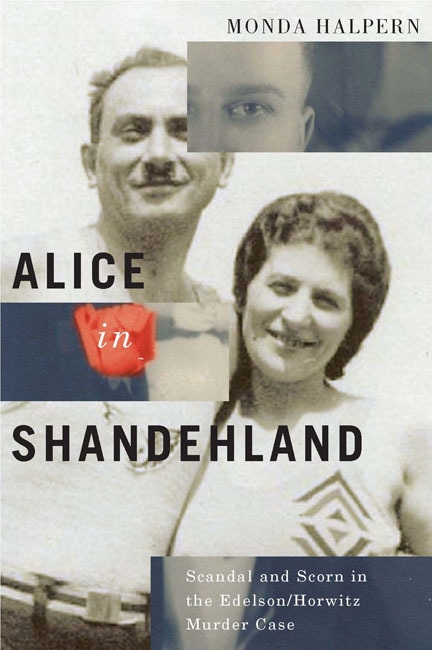
In November 1931, Jack Horwitz was shot and killed, and Ben Edelson, a prominent Rideau Street jeweler, was charged with the murder. Alice, Ben’s wife of two decades, who for years had been having an affair with Jack, was present at the scene of the shooting. Ben was acquitted of the murder change, resumed his family life with Alice and their seven children, and continued to build his family business. The reputation of Jack, the adulterous married man, remained relatively unblemished after his death. Alice, on the other hand, faced the contempt of and ostracization by members of Ottawa’s closeknit Jewish community. She bore the burden of the “shandeh,” Yiddish for “shame” or “disgrace,” not her accused husband, Ben or her lover, Jack.
Halpern’s book takes the reader along multiple Lowertown streets – Myrand Avenue where Ben confronted Jack and Alice together, Rideau Street where Jack was shot in the Edelson Jewelry store, the Water Street General Hospital where Jack died, and the Friel and Clarence Street homes where the Edelson family lived. Along the way, the author provides substantial history about our city’s Jewish population in the 1930s. She highlights how Jewish families lived and supported each other as they settled near the Lowertown synagogues. She describes the general acceptance of Jewish men who were successful entrepreneurs in the wider Ottawa business world. She offers insights into the changing but still traditional world of Jewish women as the anchor in marriage and the foundational pillar in the home. She details the process followed in the six-week trial where the twelve male jurors exonerated the respectable, middle-class, yet betrayed, Ben Edelson.
The title of the book points to Alice Coblentz Edelson who was present at the shooting, but who did not appear as a witness during court proceedings. Her perspective is not known as she never spoke publicly about the incident. But for the jurors and other observers, Alice was responsible for the death of her lover Jack, and her husband Ben was justified in defending his honour. Alice alone had to bear the shame of being an adulteress who had disrespected the sacred bonds of marriage and motherhood.