Wrap-around support at the Lowertown Food Bank
By Jean Gaël Zabayo
The integrated Wrap-Around Support program at the Lowertown Food Bank is a new initiative that combines personalized support for individuals with efforts to provide guidance towards fostering lasting improvements in living conditions.
Poverty and food insecurity are realities affecting many individuals and families. Beyond a lack of financial resources, these challenges can limit access to housing, employment, healthcare, and community services. To effectively address these issues, it is essential to go beyond food aid and tackle the root causes by offering a diverse range of services.
Let’s imagine Alex, who has just arrived in Canada:
Alex arrives in Canada with a budget, life plans, and his cultural background. He settles into a rented apartment in Lowertown with a friend. After a week, he begins exploring the job market and finds that daily life presents many challenges. He hears about community resource centres that offer support, guidance, and referrals, as well as emergency food banks. He decides to visit the Lowertown Community Resource Centre (LCRC) for more information. At the Centre, Alex is directed to the Integrated Wrap-Around Support worker so they can find appropriate solutions to meet his needs.
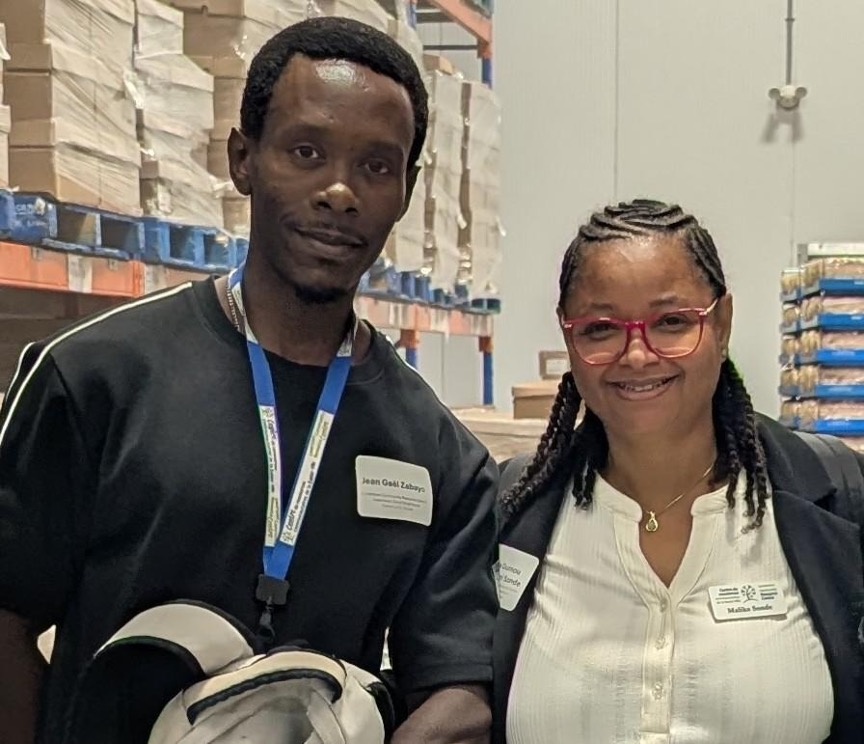
(Photo by Françoise Drouin-Soucy)
After some discussion, Alex realizes he can benefit from several services. The worker registers him for the food bank. At the same time, Alex learns about other services offered by the LCRC and is directed to resources that assist with budgeting, housing, job hunting, as well as others tailored to his specific needs. They create an action plan and a brief follow-up strategy to ensure their support is effective.
By the end of his meeting with the Integrated Wrap-Around Support Program worker, Alex leaves the Centre feeling content and optimistic. He is reassured by the knowledge that he has support and feels confident in his efforts as he proceeds with the referrals provided by the LCRC.
At the core of the program is a professional team dedicated to supporting individuals and families throughout their journey. Staff members provide personalized guidance tailored to each participant’s unique circumstances.
The program helps participants navigate available services, set short-term goals, access counseling, and create realistic action plans to improve their situations. By acting as a bridge to essential resources, the program empowers participants to build autonomy, increase their confidence, and overcome obstacles.
However, the program acknowledges that individual support alone is insufficient for lasting poverty reduction. Community organizations must also possess the tools and skills to serve their members effectively. Consequently, the model incorporates training initiatives specifically designed for food bank leaders.
These training sessions target key areas including communication, fundraising, and advocacy. By enhancing these competencies, food banks are better positioned to mobilize their communities, secure financial stability, and heighten awareness of the needs of those they serve.
The Integrated Wrap-Around Support Program illustrates that a holistic strategy produces more sustainable outcomes than emergency assistance alone. By merging personalized support, organizational capacity building, community partnerships, and advocacy, the initiative fosters a more robust and resilient support network.
Ultimately, addressing poverty demands collective action that prioritizes individuals in the development of solutions while simultaneously transforming the systems that influence their daily lives. Through its integrated framework, this program marks a meaningful advancement toward creating communities that are more inclusive, supportive, and effectively equipped to serve their most vulnerable members.