The Ottawa River keeper – testing local waters for our wellbeing
By Ottawa Riverkeeper
Editor’s note – this article builds on “Testing our Lowertown waters,” published in our November 2025 issue, and provides updated 2026 water quality statistics.
The Ottawa River and its tributaries are a special part of life in our region, offering plenty of ways to enjoy the outdoors. Whether you are swimming, paddling, and fishing in the river or simply spending time along the shoreline, knowing the current water quality conditions can help you stay safe while making the most of your time on the water.
Throughout the summer, Ottawa Riverkeeper monitors recreational water quality at a number of locations. Water samples are tested for the E. coli bacteria and results help people understand current conditions and choose appropriate activities. Results for designated swim areas are available on Swim Guide, an app and website that is updated regularly providing information and water quality data for hundreds of beaches.
So, how much E. coli is too much? Well, E. coli guidelines depend on how you’ll be using the water. Primary contact activities, such as swimming and wading, involve more direct contact with the water. For these activities, local water quality guidelines recommend that levels be below 200 E. coli per 100 mL to be considered safe. Secondary contact activities, including paddling, rowing, and fishing, involve less direct contact with the water. Although there are no specific recreational water quality guidelines for secondary contact activities, Ottawa Riverkeeper uses a threshold of less than 1,000 E. coli per 100mL, based on Health Canada recommendations.

In Lowertown, Ottawa Riverkeeper monitors two locations: Bordeleau Park (thanks to our dedicated volunteers, Sandra and Mark!) and the Ottawa Rowing Club. Based on the secondary contact guideline used by Ottawa Riverkeeper, Bordeleau Park has passed 83% of tests with an average of 396 E. coli per 100mL and the Ottawa Rowing Club has passed 100% of the tests with an average of 37 E. coli per 100mL this summer. While we test the water at these sites, it’s important to remember that neither is a designated swimming area. Unlike public beaches, these locations aren’t managed for swimming and may have hazards unrelated to water quality like currents, boat traffic, underwater obstacles or boat traffic.
Fortunately, there are plenty of other ways to enjoy the river. The Bordeleau Park boat launch is a great access point for canoeing, kayaking, paddleboarding, and other small watercraft. The Ottawa Rowing Club docks are private property, but the club’s historic boathouse on Lady Grey Drive has served as a launch point for rowers for more than a century! Fishing from the shoreline is another popular option, as long as you have a valid Ontario fishing licence and follow catch limits and seasonal closures.
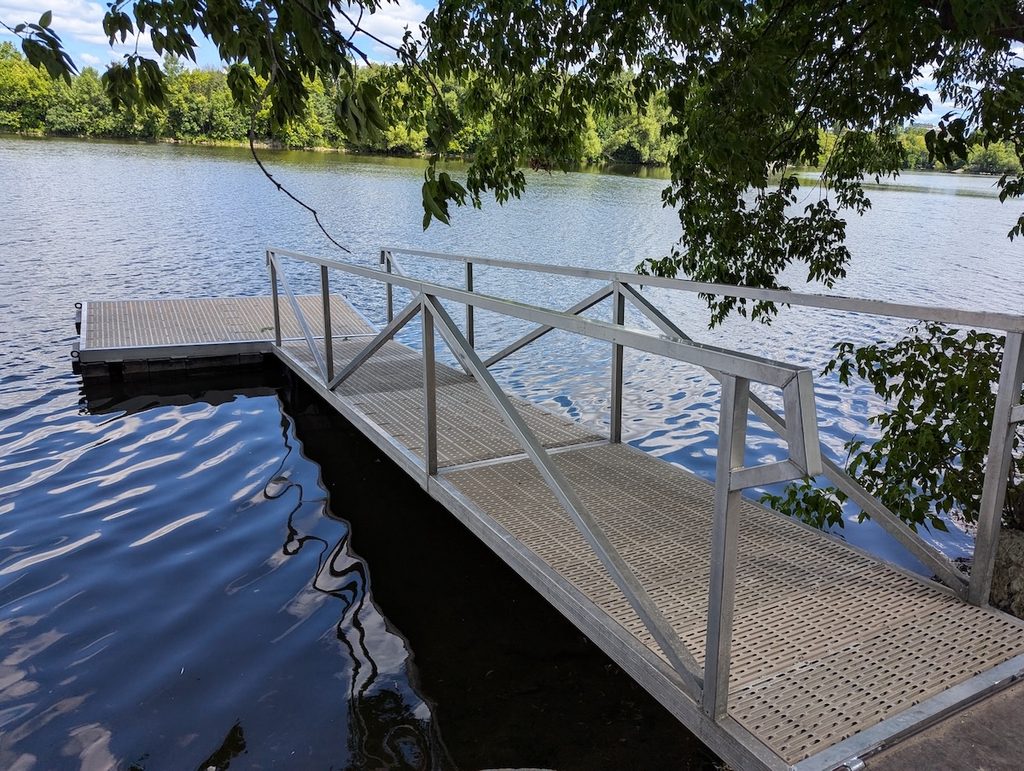
(Photo: John Chenier – submitted for August 2025 issue)
Before heading out, check the weather and water quality conditions, since E. coli concentrations can change quickly in urban areas. Don’t forget to wear a properly fitted life jacket, carry the required safety equipment, and let someone know where you’re going, and when you expect to return. Enjoy the river!
Ottawa Riverkeeper, a registered Canadian charity, is a champion and collective voice for the Ottawa River watershed, providing leadership and inspiration to protect, promote and improve its ecological health and future.